
Summary:
In this blog post, we will discuss the following:
- The need for recognising unacknowledged accomplishments of women in the field of AI
- Disparity in visibility and representation of women and men in AI
- Case studies of women who have made significant contributions in AI
- Challenges encountered by women in AI and analytics-driven fields
- Ways to enhance representation and participation of women in AI
Unsung Heroines of the AI Revolution
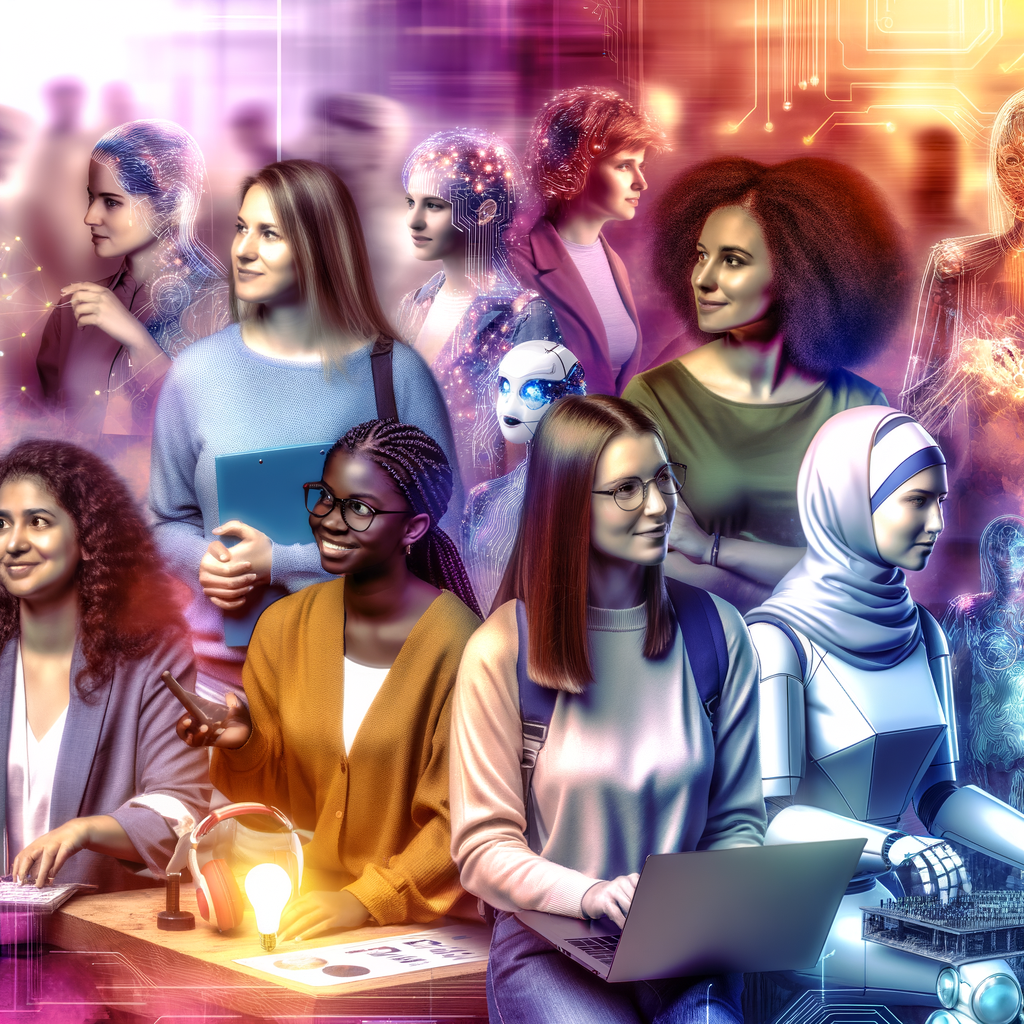
Although the field of Artificial Intelligence (AI) is largely dominated by men, many women have made significant contributions and continue to shape the AI revolution. Despite their contributions, these women often remain unnoticed and uncelebrated.
The Underrated Role of Women in the AI Boom
According to a New York Times piece last year, most individuals recognised as leaders in the field of AI are men, including Elon Musk, Larry Page, and Sam Altman. This male-centric narrative overlooks the numerous women who have made significant contributions to AI.
Contrary to general perception, the AI revolution was not solely triggered by the tech-elite or business magnates; it began with academics, ethicists, regulators, and hobbyists – many of them women. They laid the groundwork for today's AI and AI-based generic systems (GenAI), often working tirelessly behind the scenes.
Case in Point: Bright Minds in AI
Among these remarkable women is Elaine Rich, a retired computer scientist who published one of the first textbooks on AI in 1983 and later became the director of a corporate AI lab in 1988. Cynthia Dwork, a Harvard Professor, has made significant strides in AI fairness, differential privacy, and distributed computing. Cynthia Breazeal, a roboticist, Professor at MIT and co-founder of the robotics startup Jibo, developed one of the earliest "social robots," Kismet, in the late '90s and early '00s.
The Gender Gap in AI
Yet, despite such contributions, women compose a minimal fraction of the global AI workforce. A Stanford study in 2021 found that only 16% of tenure-track faculty focusing on AI are women. Furthermore, an analysis by Nesta, the U.K.’s innovation agency, discovered that the proportion of AI academic papers co-authored by women hasn't improved since the 1990s.
The Challenges Faced
A survey by Deloitte on women in AI reported several prominent issues, such as judgment and discrimination, lack of equal opportunities, and an absence of role models. This gender bias begins as early as college, with numerous women reporting missed opportunities to intern in AI or machine learning as undergraduates.
Striving for Balance
The disparity needs to be addressed for the growth – and ethical deployment – of AI. Nesta’s findings highlight that women are more likely to consider societal, ethical, and political implications in their AI work, making their insights invaluable.
The Solutions
The recognition of accomplished women in AI is a step towards rectifying this situation. However, more is required. A recurrent theme in the strategies proposed by these women is the importance of strong mentorship, commitment, and leading by example. On an organizational level, implementing hiring and education policies that uplift women in AI can create change. Moreover, decision-makers in positions of power can enact more diverse, supportive policies that foster an environment conducive to the growth and success of women in AI.
By amplifying the voices and accomplishments of these women, we can progressively shift the narrative, make the AI sector more inclusive, and ensure that the AI revolution truly represents all of us.
Interested in learning, discussing and exploring more on digital transformation and AI? Catch the daily updates on our podcast Digimasters Shorts.
Leave a Reply