
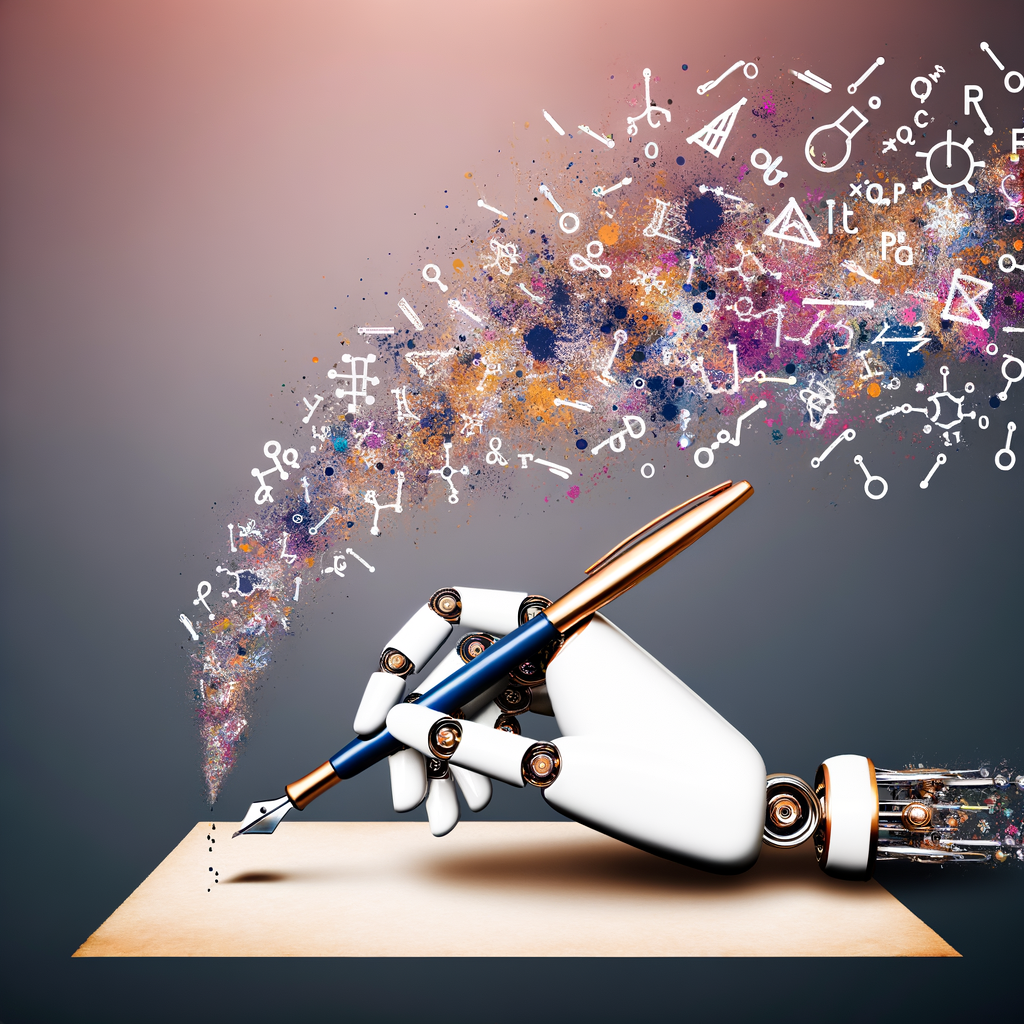
ChatGPT and the Future of Scientific Publishing
Scientific publishing is a cornerstone of academic success – yet, it is a laborious process with increasing pressure for researchers to produce high-quality articles for reputable journals. However, the advent of artificial intelligence (AI) in professional writing signifies a potential paradigm shift in how scientific publishing is approached. One AI platform that's generating buzz in the community is OpenAI’s ChatGPT.
This blog article will take a closer look at this AI platform, focusing on its use in scientific writing. It will delve into studies involving ChatGPT and shed light on how AI may reshape the path to publication in scientific journals.
Blog Summary:
- Unpacking the burgeoning role AI plays in scientific publishing.
- Delving into the uses and pitfalls of AI in academic writing.
- An in-depth exploration of ChatGPT's performance in producing review articles.
- Discussing the benefits of combining human collaboration with AI output.
- The challenges in AI writing, specifically inaccuracy, plagiarism, and programming limitations.
The Emergence of AI in Scientific Publishing
The conventional process of penning down research-based articles has been marked by the tireless efforts of students and researchers alike. Yet, AI platforms like ChatGPT offer a new avenue for consolidating scientific information and presenting it in a digestible manner. With deep learning capabilities, ChatGPT is not only luring students seeking help with their homework or essays but intriguing scientists under pressure to publish papers.
ChatGPT in Review Article Writing: Promise and Pitfalls
ChatGPT holds promise when tasked with writing review articles. Review articles involve sifting through a vast amount of existing research, analyzing the results, reaching a conclusion about the state of the science on the topic, and providing some new insight – tasks well suited to AI.
To test the efficacy of ChatGPT, Melissa Kacena, Vice Chair of Orthopaedic Surgery at Indiana University School of Medicine, arranged an insightful experiment. In her study, she compared articles written solely by students, by ChatGPT, and by a combination of both. The results were illuminating.
The Pros and Cons of AI-Generated Articles
ChatGPT's articles were appealing, easy to read, and better written than those by students. The software's efficiency and superior grammar usage were impressive. However, they had a dark side too. A shocking 70% of cited references were inaccurate, stemming from incoherent merging from different studies or purely fictitious references. The AI-written versions were also more prone to plagiarism.
Yet, there were merits to the AI contributions as well. The algorithm was faster in processing required data, and with the right instructions, it could maintain an appropriate level of diction suitable for scientific journals.
Improving Scientific Writing with AI Collaboration
AI integration does not mean replacing human input. Instead, it can represent a collaborative process where people and AI work together to produce high-quality output. In Kacena's study, the third group's articles, which combined students and ChatGPT, improved markedly with more feedback given to the software. This exemplifies how AI can learn from iterative processes, gradually honing its skills.
Addressing problems like inaccurate references and plagiarism may require fixing and refining the existing AI algorithm. By programming the AI to reference separately and avoid copying consecutive words to skirt plagiarism, there might be a solution at hand.
Conclusion: A Future Shaped by AI-Human Collaboration
AI is revolutionising scientific writing, albeit with a few hitches along the way. Despite its current shortcomings, it holds tremendous potential to streamline the writing process and generate new scientific insights.
In conclusion, as Kacena asserts, ChatGPT is here to stay, and understanding how to use it ethically, conscientiously, and scientifically sound way is crucial in navigating this new era of scientific writing. The future of scientific publishing may well lie in human-AI collaboration.
Don't forget that you can delve deeper into digital transformation and AI by tuning in to our daily podcast, Digimasters Shorts.
Leave a Reply