
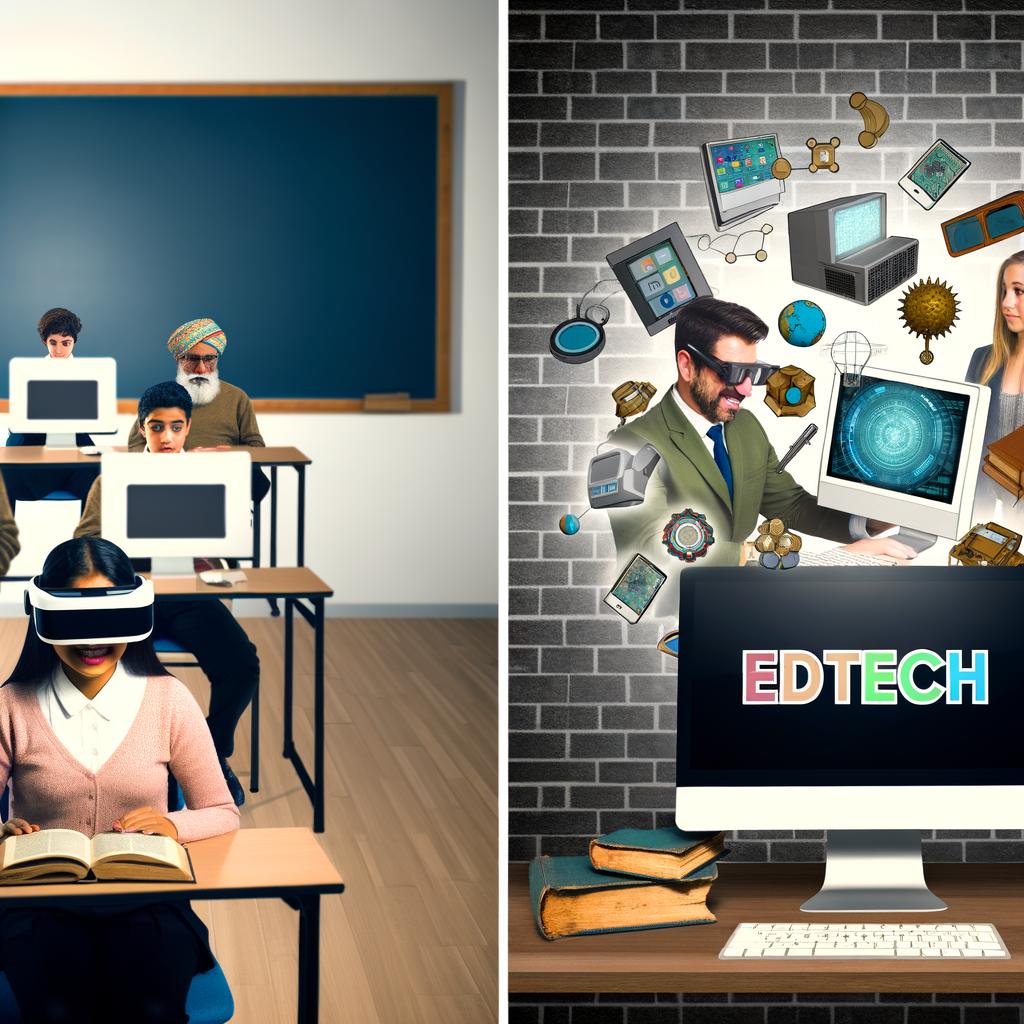
The British educational landscape is undergoing a profound transformation, presenting both remarkable opportunities and notable challenges for the burgeoning EdTech sector. As we delve into the heart of this evolution, it’s crucial to appreciate the significant shifts in teaching methodologies, the growing emphasis on personalised learning, and the exciting prospects of AI-driven platforms designed to enhance the learning experience. However, these advancements are not without their hurdles. Stringent data protection regulations in the UK pose a complex maze for EdTech businesses to navigate, ensuring student privacy while fostering an environment of innovation. Additionally, the integration of cutting-edge technology into traditional learning environments underscores a significant challenge, demanding not just infrastructural changes but also a cultural shift among educators and institutions. This comprehensive analysis aims to explore the dynamic horizon of learning, unveiling how these developments offer fertile ground for growth in the EdTech industry. We will unravel the multifaceted opportunities presented by modern educational demands, alongside the critical challenges that must be addressed to harness the full potential of technology in education. Our exploration will not only highlight the areas ripe for innovation but also navigate the complexities that accompany such profound change. This is an invitation to peer into the future of education, understanding its landscape through the lens of technology and innovation.
- Progressive Shift in Teaching Methodologies: The educational landscape in Britain is shifting from traditional, one-size-fits-all methods towards personalised, technology-enhanced learning to meet individual student needs.
- Rise of Personalised Learning: Powered by advances in EdTech, including AI and machine learning, education is becoming more adaptable, focusing on the strengths, needs, and interests of each learner.
- Challenges of Tech Integration: Integrating cutting-edge technology into traditional learning environments requires infrastructural updates, a cultural shift among educators, and a reimagining of teaching methodologies.
- Navigating Data Protection Regulations: UK’s stringent data protection laws present a complex challenge for EdTech businesses, demanding compliance while still fostering innovation.
- The Ethical Imperative: Beyond legal compliance, there’s an ethical necessity for EdTech companies to prioritize student privacy and autonomy in the development of educational technologies.
- Empowering Teachers Through Professional Development: Successful technology integration depends on equipping teachers with the skills and pedagogical strategies to effectively use EdTech in their classrooms.
- Overcoming the Digital Divide: Achieving digital equity is crucial, requiring investments in infrastructure and resources to ensure all students have access to educational technology.
- The Role of Collaborative Ecosystems: The future of education relies on partnerships among EdTech companies, educational institutions, and policymakers to create inclusive and adaptable learning environments.
- The Promise of EdTech for Educational Transformation: While challenges exist, the integration of technology in education presents unprecedented opportunities for enhancing learning outcomes and democratizing education.
Part One: The Progressive Shift in Teaching Methodologies and the Rise of Personalised Learning
The transformation of the British educational landscape is characterised by a significant shift in teaching methodologies, underscored by the move towards more personalised and adaptable learning strategies. This evolution mirrors the broader global trend towards educational models that favour flexibility, student-centred learning, and the incorporation of technology to tailor the learning experience to individual needs.
Traditional vs Modern Approaches to Education
Traditionally, the British educational system, like many around the world, has been dominated by a one-size-fits-all approach. This methodology typically involves uniform lesson plans, standardised testing, and a generalised pace of teaching, assuming a homogeneous student body with similar learning capacities and styles. However, this method has been increasingly recognised as limiting, failing to accommodate the diverse needs, abilities, and interests of individual students.
The modern approach, in contrast, emphasises personalised learning, an educational paradigm that seeks to customise learning for each student’s strengths, needs, goals, and interests. This approach often utilises technology to aid in the differentiation of instruction, allowing for a more dynamic and interactive learning experience. Personalised learning acknowledges that students learn at different rates and in various ways, and leverages technology to provide tailored educational experiences that aim to enhance learner engagement and achievement.
The Role of EdTech in Personalised Learning
Education Technology (EdTech) is at the forefront of this shift towards personalised learning. By harnessing cutting-edge technologies such as Artificial Intelligence (AI), Machine Learning, and adaptive learning systems, EdTech platforms are uniquely positioned to offer highly individualised learning experiences at scale. AI-driven platforms, for instance, can analyse a student’s interaction with the material, identifying strengths and weaknesses. This data can then be used to adjust the curriculum in real-time, presenting new challenges or revisiting areas of difficulty, effectively tailoring the learning journey to the student’s specific needs.
These technologies also afford students greater control over their learning. Through interactive and engaging platforms, learners can progress at their own pace, explore subjects of interest more deeply, and access support and resources precisely when they need them. Moreover, these tools can provide educators with valuable insights into student progress and engagement, informing more effective teaching strategies and interventions.
Benefits and Challenges
The benefits of this shift towards personalised learning and the integration of EdTech are manifold. Not only do they have the potential to increase student engagement and motivation by making learning more relevant and enjoyable, but they also offer opportunities to improve educational outcomes. Personalised learning can bridge gaps in understanding, cater to different learning styles, and promote self-directed learning, preparing students for the demands of the 21st century.
However, the transition to highly personalised, tech-driven education is not without its challenges. Significant infrastructural investments are necessary to ensure that schools have the technology and broadband capacity to support sophisticated EdTech platforms. Moreover, there is the ongoing need for professional development for educators, many of whom may be unfamiliar with or resistant to integrating technology into their teaching practices. These challenges highlight the importance of a collaborative approach, where policymakers, educational institutions, and EdTech companies work together to support the transition towards a more adaptive, personalised learning environment.
Part 1 Conclusion
The journey towards more personalised learning in the British educational landscape presents an exciting but complex challenge. EdTech companies play a pivotal role in this transformation, offering the tools and platforms necessary to realise the vision of a more adaptable, engaging, and effective education system. As we continue to navigate the delicate balance between innovation and tradition, the promise of personalised learning, powered by the latest in educational technology, presents a compelling vision for the future of education in the UK and beyond. With careful consideration of the infrastructural, cultural, and educational challenges ahead, the potential for significant, positive change in how we teach and learn is immense.
Part Two: Navigating Stringent Data Protection Regulations in the UK
As EdTech companies seize the opportunities presented by the shifting paradigms in the British educational sector, they are also faced with navigating one of the most stringent data protection landscapes in the world. The United Kingdom, through the General Data Protection Regulation (GDPR) and its own Data Protection Act 2018, has set high standards for the handling of personal data, presenting both operational challenges and ethical imperatives for businesses in the educational technology space.
Understanding the Impact of GDPR and the Data Protection Act 2018
The GDPR, a regulation that extends across the European Union and, despite Brexit, continues to influence UK law through the Data Protection Act 2018, places particular emphasis on the protection of personal data. For EdTech businesses, this means that any activity involving the processing of student information – from names and addresses to digital footprints and learning progress data – must be conducted with explicit consent and for legitimate purposes clearly communicated to the users.
This legal framework is designed to protect individuals’ data privacy but also poses several challenges for EdTech companies. For instance, the development and implementation of AI-driven platforms, which rely on the analysis of vast quantities of data to personalise learning experiences, must be carefully managed to ensure compliance. The algorithms used cannot simply process data indiscriminately; instead, they must be designed from the outset to adhere to principles of “data minimisation” and “purpose limitation”.
The Ethical Imperative Beyond Compliance
Beyond the legal requirements, there is an ethical imperative for EdTech businesses to consider. With the increased digitisation of education, the volume of student data being collected is unprecedented. This raises significant concerns not only about privacy and consent but also about the broader implications of datafication on students’ rights and freedoms.
EdTech companies, therefore, face the challenge of balancing innovation with ethical considerations. Developing platforms that enhance learning while ensuring the dignity, rights, and privacy of students is paramount. This includes implementing robust data protection measures, transparent data practices, and providing controls that allow students and educators to understand and manage their data effectively.
Strategies for Compliance and Innovation
To successfully navigate the UK’s data protection landscape, EdTech companies must adopt a proactive approach to compliance. This involves several key strategies:
- Privacy by Design: Incorporating data privacy features and considerations into the development phase of EdTech products, rather than as an afterthought. This enables companies to build trust with users and streamline compliance efforts.
- Data Protection Impact Assessments (DPIAs): Conducting assessments to identify and mitigate risks associated with data processing activities. DPIAs are particularly vital in the early stages of developing new technologies or when introducing significant changes to existing platforms.
- User Education and Transparency: Providing clear, accessible information about how and why student data is being used. This not only aids compliance by ensuring informed consent but also empowers users, reinforcing the ethical stance of the EdTech provider.
- Continuous Professional Development: Investing in training and resources for staff to keep abreast of evolving data protection laws and ethical considerations. A well-informed team is crucial for maintaining compliance and fostering an organisational culture that values privacy and data protection.
Part 2 Conclusion
Navigating the complexities of data protection regulations in the UK represents a significant challenge for the EdTech sector. However, it also offers an opportunity to lead by example in the ethical use of technology in education. By embracing privacy and data protection as core components of their operations, EdTech companies can not only ensure compliance with stringent regulations but also foster trust and credibility with users. This trust is essential for facilitating the integration of technology into educational environments and for realising the full potential of personalised, tech-driven learning solutions in the UK’s evolving educational landscape. Compliance and ethical considerations, therefore, are not just hurdles to overcome but foundational elements of a successful EdTech business strategy.
Part Three: Bridging the Gap Between Technology and Traditional Learning Environments
The integration of advanced technologies into traditional learning environments represents a critical threshold for the EdTech sector in the UK. This venture is not merely about importing hardware and software into classrooms; it involves cultivating a culture that embraces digital innovation at its core. The challenge here is multifaceted, involving infrastructural adaptations, curriculum development, teacher training, and shifting pedagogical perspectives. Overcoming these hurdles is essential for realising the transformative potential of EdTech in enhancing educational outcomes.
Infrastructural Readiness and Digital Equity
One of the primary barriers to integrating technology in schools is the issue of infrastructural readiness. Many educational institutions, particularly in rural or underprivileged areas, lack the necessary broadband connectivity and digital devices to support tech-driven learning solutions. This disparity exacerbates the digital divide, with students in less affluent areas at risk of being left behind in the digital literacy race.
To address this, there must be a concerted effort from both the public and private sectors to invest in digital infrastructure, ensuring that all students have equal access to the tools and resources they need. This includes not only hardware and connectivity but also accessible digital content that is relevant and engaging. EdTech companies can play a pivotal role in this endeavour by developing adaptable, low-bandwidth solutions that can be used across a variety of settings.
Curriculum Development and Teacher Training
Integrating technology into education is not about substituting traditional teaching methods but augmenting them. For this to be effective, the curriculum needs to evolve to include digital literacy and foster a culture of continuous learning and adaptability. EdTech solutions should be seen as tools to enhance critical thinking, creativity, and problem-solving skills, rather than replacements for traditional learning methodologies.
Key to this transition is teacher training. Educators need to be equipped not only with the technical skills to utilise digital tools but also with the pedagogical understanding to integrate these tools effectively into their teaching practices. Professional development programmes that prioritise hands-on, practical training in the use of EdTech, tailored to various subject areas and learning stages, are vital. By empowering teachers, we ensure that technology enhances rather than disrupts the learning process.
Shifting Pedagogical Perspectives
The successful integration of technology in education requires a shift in mindset from a predominantly traditional, teacher-centred approach to one that is more learner-centred. This shift involves embracing failure as a part of the learning process, fostering curiosity, and encouraging self-directed learning. It also means recognising the role of technology not just as a means to an end but as a dynamic partner in the educational journey.
EdTech platforms that offer personalised learning experiences can lead the way in promoting this shift. By providing insights into individual learning patterns and progress, technology can help teachers to adopt a more facilitative role, guiding students through their personalised learning journeys. This, in turn, demands a flexible and adaptive approach to education, where learning is not confined to the classroom but is seen as an ongoing, lifelong process.
Part 3 Conclusion
The integration of technology into traditional educational environments in the UK poses a considerable challenge but also offers an unprecedented opportunity to redefine what learning looks like in the 21st century. By addressing infrastructural needs, evolving curriculums, and redefining educator roles, EdTech can bridge the gap between traditional and digital learning methods. This requires a collaborative effort amongst policymakers, educators, EdTech innovators, and the wider community to foster an inclusive, adaptable, and forward-thinking educational culture. The future of education is not about technology replacing traditional methods but enhancing them, enabling every learner to reach their full potential in an increasingly digital world. As we move forward, the blending of technology and traditional educational values promises a horizon rich with possibilities for student engagement, personalised learning, and, ultimately, a more equitable and accessible educational landscape.
Overall Conclusion and Recommendations
As we conclude our reflective journey through the shifting landscapes of the British educational sector and its burgeoning relationship with EdTech innovation, the palpable potential for transformation within learning environments emerges with clarity and urgency. The marriage of technological advancements with personalised learning has illuminated a path forward that is both inspiring and laden with responsibility. The exploration of this nexus reveals that while the road is fraught with challenges, the destination promises an educational paradigm where every learner can flourish.
EdTech stands at the threshold of revolutionising education, guided by the dual beacons of technological possibility and the imperative for inclusivity and accessibility. The convergence of AI-driven platforms with the individualised learning needs of students heralds a new era of educational equity and excellence. However, achieving this vision requires navigating the complex interplays of innovation, policy, ethics, and culture.
Strategic Recommendations for EdTech Stakeholders
- Foster Collaborative Ecosystems: The future of education and technology integration necessitates robust partnerships between EdTech companies, educational institutions, policymakers, and communities. By fostering environments that encourage dialogue and shared objectives, stakeholders can address infrastructural disparities, enhance digital literacy, and ensure that EdTech solutions are accessible to all learners, regardless of their socio-economic background.
- Embrace Ethical Innovation: Compliance with data protection laws such as GDPR is only the starting point. EdTech companies need to traverse beyond the bounds of legal compliance towards ethical innovation, prioritising student privacy and autonomy. This entails designing AI-driven solutions that are transparent, explainable, and controllable by end-users, thereby safeguarding the rights and dignity of learners.
- Invest in Teacher Empowerment: The pivotal role of educators in this digital transformation cannot be overstated. Investment in comprehensive professional development programs is essential to equip teachers with not just the technical proficiency but also the pedagogical creativity to integrate technology into their teaching practices effectively. Empowering teachers as facilitators of learning, comfortable with technology and adaptable to its evolution, will be critical to the successful implementation of EdTech solutions.
- Champion Digital Equity: Bridging the digital divide requires concerted efforts to ensure that every learner has access to the necessary technological tools and resources. EdTech companies, in partnership with governments and organisations, should advocate for and invest in the expansion of digital infrastructure, particularly in underserved areas, to foster a more inclusive educational landscape.
- Navigate Cultural Shifts: The integration of technology in education implies profound shifts in cultural paradigms within traditional learning environments. Emphasising the value of a learner-centred approach, which accommodates failure as a learning mechanism and fosters an atmosphere of curiosity and innovation, will be indispensable. Cultivating a culture that truly embraces the enhancement capabilities of EdTech will require ongoing dialogue, reflection, and adaptation across all levels of the educational ecosystem.
Looking Ahead
The horizon of learning, as shaped by the evolving British educational landscape and the progressive encroachment of EdTech, is rich with opportunities for meaningful change. The envisioned future is one where education is not merely a transmission of knowledge but a dynamic, interactive, and personalised journey that empowers every student to achieve their fullest potential.
For EdTech businesses, aligning growth strategies with the ethical, pedagogical, and operational imperatives highlighted throughout this exploration will be crucial. The path forward is simultaneously exhilarating and demanding, requiring a balance of innovation, responsibility, and collaboration.
As we contemplate the future of education in the UK and beyond, it becomes evident that the transformative potential of EdTech is not solely in its technological prowess but in its capacity to humanise, personalise, and democratise learning. The journey thus far has illuminated the complexities, challenges, and immense possibilities that lie ahead. With a collective commitment to these principles, the next chapter in the narrative of educational transformation promises to be as profound as it is promising.
Where to Find More Information
For those seeking to delve deeper into the intricacies of the EdTech landscape and its integration into educational practices, a wealth of resources and forums exists. Engaging with industry reports, attending EdTech conferences, participating in online forums, and listening to podcasts such as Digimasters Shorts and The Digimasters Podcast can provide invaluable insights and perspectives. Additionally, engaging directly with EdTech innovators, educators, and policymakers offers a practical lens through which to view the challenges and opportunities inherent in shaping the future of education.
As we navigate this evolving terrain, the exchange of ideas, experiences, and best practices will be key to unlocking the transformative power of EdTech. Together, let’s forge a path towards an educational future that is as inclusive as it is innovative.
Leave a Reply